
Why Line Dancing Works Well for Groups
No partner required, no complicated rhythms to learn. Line dancing is social, fun, and great for building community. Here’s how to jump into your first line dancing social.

The Beauty of Dancing Without a Partner
You walk into a dance studio and immediately notice something different. Everyone’s moving together, but nobody’s worried about stepping on anyone’s feet or being judged for their footwork. That’s the magic of line dancing.
Unlike partner dancing, you don’t need someone else to show up. You’re not dependent on another person’s schedule or skill level. Line dancing works because it’s fundamentally social without being stressful — you’re part of a group, moving together, without the pressure of one-on-one coordination.
Everyone moves to the same beat. No complicated lead-and-follow. No worrying you’ll mess up someone else’s dance.

Why Groups Love Line Dancing
The group aspect isn’t just a bonus — it’s the whole point. When you’re dancing in a line with 20 or 30 people, something happens. You’re connected to everyone around you, but there’s no pressure on any individual. You can focus on learning the steps without worrying about a partner’s expectations.
We’ve seen it happen countless times. People come nervous to their first session. By the second or third song, they’re laughing, connecting with the person next to them, and actually enjoying themselves. The group energy lifts everyone up.
- You move at your own pace within the group rhythm
- No waiting for a partner to be ready
- Built-in support system from 20+ dancers around you
- Low pressure to be perfect — everyone’s learning
What Actually Happens in a Line Dancing Social
Most sessions run for about two hours. You’ll arrive, maybe grab some water, and the instructor will run through 4-6 dances. Some are repeats from last week (so you’ll feel confident), and some are new. Each dance is usually taught in segments — they’ll show you the first 8 counts, everyone tries it together, then you move on to the next part.
The beauty is you don’t need to memorize anything in advance. It’s all taught in real time, and the instructor won’t move on until most people have got it. Yes, some people will pick it up faster than others. That’s completely normal. By the third run-through of a dance, you’ll notice you’re moving with much more confidence.

The Steps Are Simpler Than You’d Think
Line dancing uses basic building blocks. You’ve probably got most of them already: walking, rocking side to side, pivoting, and some simple turns. The dances string these together in different patterns, but nothing’s overly complicated for beginners.
A typical beginner line dance might have you walk forward four steps, then backward four steps. Maybe a side rock (where you shift your weight side to side). Then a pivot turn. That’s it. You’re repeating that sequence, and suddenly you’ve danced for a song. Most popular line dances — think “Watermelon Crawl” or “Cowboy Boogie” — are built on this same simple structure. The instructor might call out the steps as you go: “Walk, two, three, four, now rock, now turn…” It’s rhythmic and helps you stay on beat.
The Social Part Is Actually the Best Part
Here’s something we hear from nearly everyone who tries line dancing: they expected to learn dancing, but what they actually got was a community. The group bonds quickly because you’re all doing the same thing, struggling with the same steps, and laughing when someone gets the rhythm slightly off. There’s an honesty to it.
People come back not just for the dancing, but for the people. You see the same faces each week. You start to know who likes which music, who’s patient with newer dancers, who’s got the energy to keep going. And if you miss a session, people notice and ask where you’ve been. That sense of belonging — that’s something partner dancing can’t always offer.
“I came thinking I’d learn some dances. What I didn’t expect was to actually feel part of something. Everyone’s welcoming, there’s no judgment, and I’ve made real friends here.”
— Isabel, 52
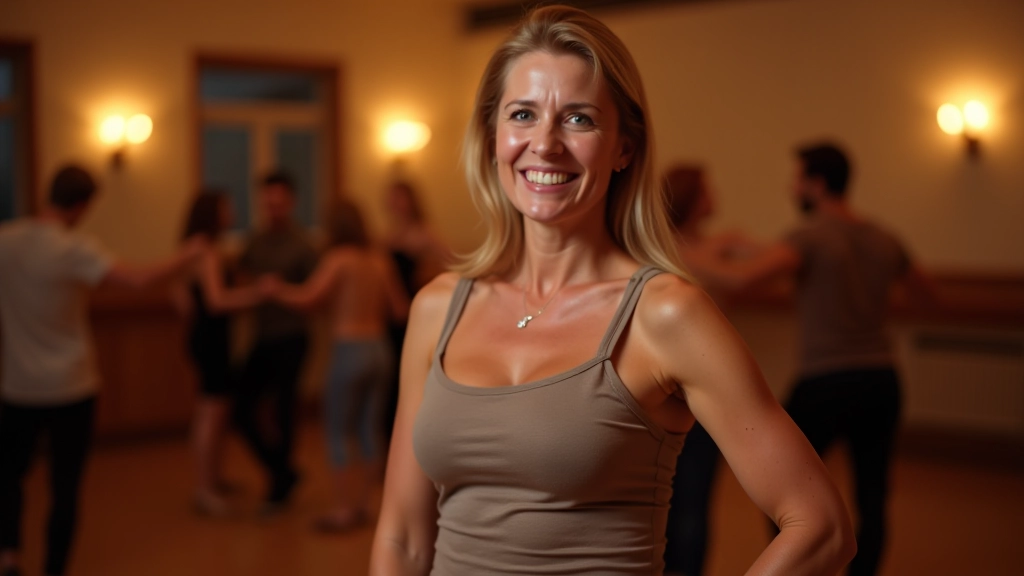
Your First Session: What to Actually Expect
Show up 10-15 minutes early. Wear comfortable clothes and shoes with a smooth sole — you don’t want rubber gripping the floor. Some venues ask for line dance shoes specifically, but honestly, most people start in regular sneakers. There’s no dress code. Nobody’s there to impress anyone.
The instructor will usually ask if anyone’s new and might pair you with someone who’s done this before. Don’t worry — they’re just standing next to you, not evaluating you. You’ll probably get through the first dance feeling a bit lost, the second dance a little more comfortable, and by the third dance, you’ll catch yourself actually enjoying it. That’s the normal progression.
If you mess up? Everyone messes up. It’s part of it. The music keeps playing, and you just jump back in. Nobody’s keeping score.
Why It Works, Simply Put
Line dancing works for groups because it removes the barriers that make dancing intimidating. There’s no partner to coordinate with, no pressure to be perfect, and no reason to sit on the sidelines. You’re part of a group moving together, learning together, and supporting each other. That’s powerful.
If you’ve been thinking about trying it — whether you’ve danced before or you’re completely new to it — a line dancing social is genuinely one of the friendliest, most welcoming ways to get moving and connect with people. The steps are manageable. The community is real. And the fun? That’s guaranteed.
Ready to give it a try? Find a line dancing session near you and show up. That’s really all you need to do.
Explore Dance Events in PortugalAbout This Article
This article is informational and based on common practices in line dancing communities. While line dancing is a low-impact activity suitable for most people, individual circumstances vary. If you have health concerns, mobility issues, or are recovering from injury, consult with a healthcare professional before starting any new physical activity. Instructors at dance venues can also suggest modifications based on your needs.
Related Articles

Getting Started with Ballroom Dancing as an Adult
You don’t need a partner or prior experience. We’ll walk through the fundamental steps and what to expect in your first class.
Read More
What to Expect in Your First Salsa Workshop
Salsa’s rhythm takes getting used to. We cover the basic box step, partner connection, and how to move with confidence from day one.
Read More
Understanding Tango Connection and Partner Work
Tango is about listening to your partner through physical connection. We’ll explore what that means and how to develop it.
Read More