
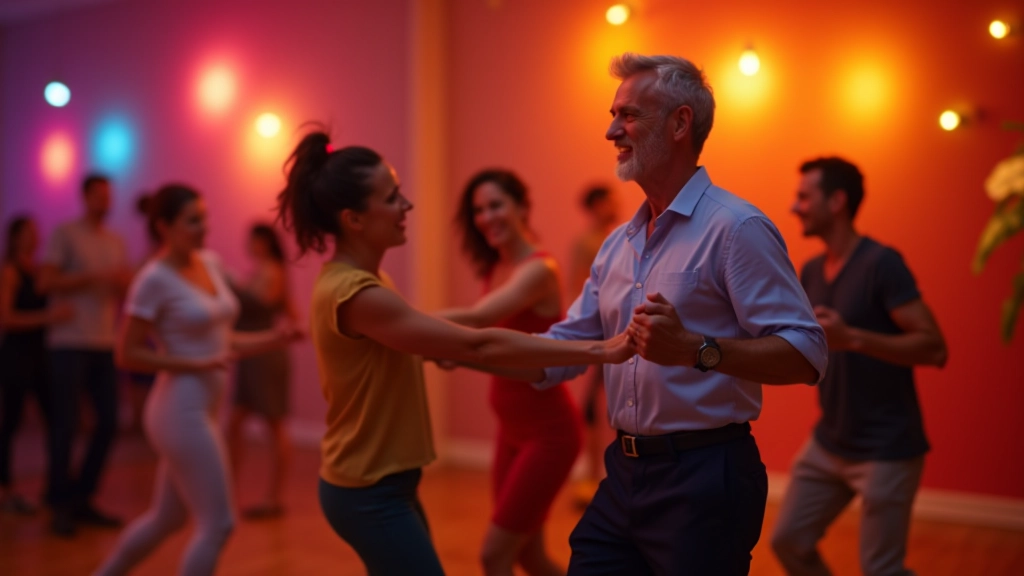
What to Expect in Your First Salsa Workshop
Salsa’s rhythm takes getting used to. We cover the basic box step, partner connection, and why hip movement matters more than you’d think.
Read MoreYou don’t need a partner or prior experience. We’ll walk through the fundamentals — posture, frame, and basic steps — so you can feel confident on the dance floor.
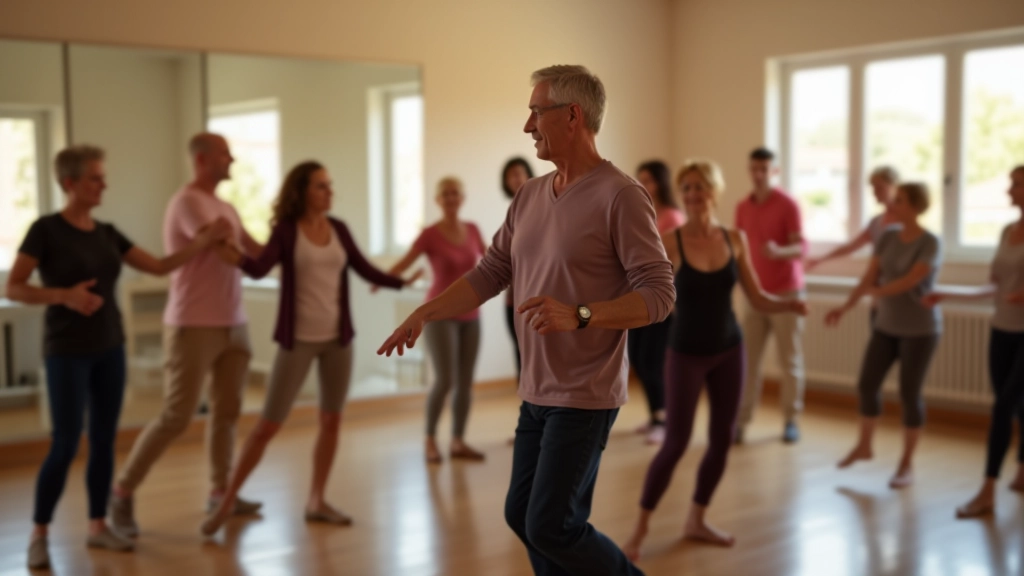
Here’s the thing — if you think ballroom dancing is only for young people or those who grew up dancing, you’re missing out on something special. Adults starting at 40, 50, even 60+ are discovering that dancing offers way more than just movement. It’s social connection, mental sharpness, and genuine fun all wrapped into one activity.
Most people hesitate because they worry about looking silly or being “too old to learn.” But honestly? The ballroom community is incredibly welcoming. You’ll find folks at every stage — some dancing for months, others for decades. Everyone remembers what it’s like to be nervous on day one.
The beauty of starting as an adult is that you bring maturity and patience to the learning process. You’re not trying to impress anyone. You’re there because you genuinely want to learn, and that changes everything about how quickly you progress and how much you enjoy it.
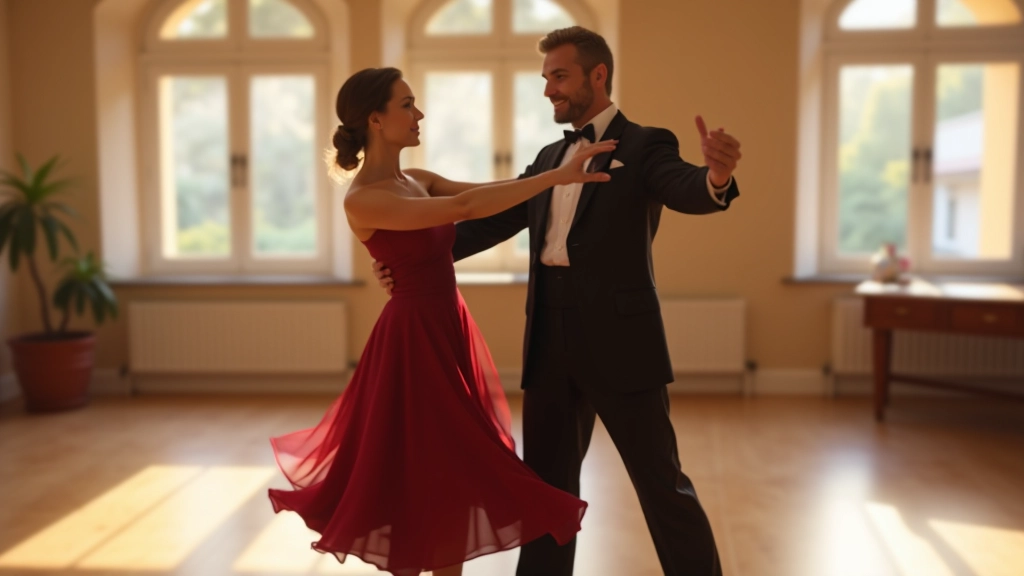
Every dancer — whether you’re learning Waltz, Tango, or Foxtrot — needs to master these foundational elements first.
Your body position is everything. Shoulders back, core engaged, head up. Think of a string pulling you gently upward from the crown of your head. Good posture isn’t about being stiff — it’s about standing tall while staying relaxed.
Frame is how you hold your arms and position yourself relative to your partner. In closed position, your left hand rests on your partner’s right shoulder blade, your right hand holds their left hand at chest height. It’s intimate but structured — there’s a reason for every position.
Ballroom isn’t about big, flashy steps. It’s about controlled weight transfer. You learn to shift your weight deliberately from one foot to the other, maintaining that frame while your feet do the work. Most basic steps involve just 3-4 simple movements.
Waltz is often the first dance beginners learn — and for good reason. The rhythm is straightforward (1-2-3, 1-2-3), the steps are simple, and it feels immediately elegant.
Leading foot steps forward on count 1, traveling forward with your partner.
Your second foot moves to the side on count 2, keeping your frame intact and body connected.
Your trailing foot closes to meet your leading foot on count 3. You’re back to center, ready to repeat the pattern.
That’s it. That’s the basic Waltz. Most people get this in their first lesson. The refinement — how smoothly you move, how you control your rise and fall — that takes time. But the pattern itself? Simple.
Here’s a realistic timeline for adult beginners who practice consistently.
You’re learning posture, frame, and basic weight transfer. Your feet feel clumsy. Your brain is working overtime. This is normal. You’re building muscle memory and coordination that doesn’t exist yet.
The basic steps start feeling natural. You can do a simple Waltz without counting on your fingers. You’re noticing other dancers’ techniques. You’ve probably started attending social dance nights.
You’re confident enough to dance with different partners. You’ve learned 2-3 different dances. Your posture has improved noticeably. You’re starting to understand the musicality — how to match the dance to the rhythm.
You’re genuinely dancing, not just stepping through patterns. You can lead or follow smoothly. You understand frame and connection deeply. You’re probably thinking about competing or taking more advanced workshops.
Portugal’s got a thriving ballroom community, especially in Lisbon and Porto. Most cities have at least one dance studio offering classes specifically for beginners and adult learners.
Look for studios that advertise “absolute beginners” or “adult starter” programs. You want instructors who understand that adult learners process information differently. We tend to appreciate clear explanations and structured progressions. Don’t join a class that assumes prior dance experience.
Most studios provide partners during group classes, so you don’t need to worry about finding one beforehand. You’ll dance with different people each session, which actually helps you learn faster.
Before you sign up, let’s address the doubts you might have. These are the things people worry about — and why they’re actually not a problem.
False. Group classes rotate partners constantly. You’ll actually learn faster dancing with different people because you adapt to various styles and techniques. Regular partners help with advanced work, but they’re not required to start.
Unlikely. Adult beginner classes are full of people aged 40-70. You won’t be alone. You won’t be the least flexible either — everyone’s dealing with the same challenges.
You’ll look pretty good within 3-4 months if you practice regularly. Within 6 months, you’re actually dancing. The difference between month one and month six is genuinely remarkable.
Nope. Ballroom is more about coordination and musicality than athleticism. Some of the best dancers aren’t particularly athletic in the traditional sense. They’re just dedicated to the craft.
There’s no perfect time to start ballroom dancing. You won’t feel completely ready — nobody does on day one. But you’ll walk into that first class and realize you’re surrounded by people just like you. Nervous. Excited. Ready to learn something new.
The fundamentals we’ve covered — posture, frame, basic steps — these aren’t complicated. Your first class will teach them step by step. Within weeks, you’ll be moving across a dance floor with confidence. Within months, you’ll understand why people fall in love with ballroom dancing.
Portugal’s dance community is waiting. Studios are running classes every week. Social dances are happening. All you need to do is show up.
Explore Dance Events in PortugalThis article provides educational information about getting started with ballroom dancing as an adult beginner. The techniques and progression timeline described are general guidelines based on common beginner experiences. Individual results vary depending on practice frequency, natural ability, and teaching quality.
Before beginning any new physical activity, especially if you have health concerns or injuries, consult with your doctor. Dance instructors and studios in Portugal are best positioned to give personalized instruction suited to your specific needs and abilities.

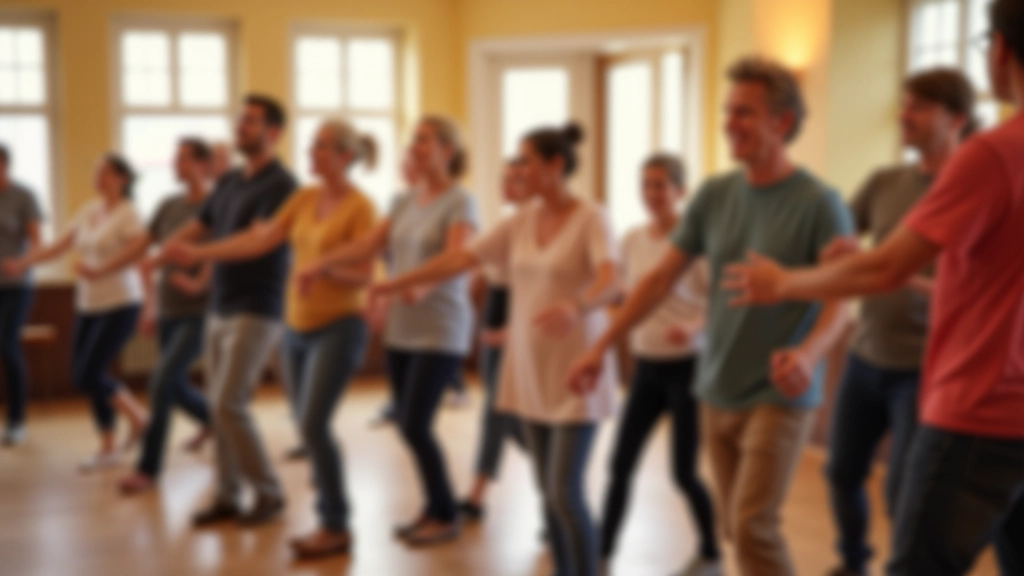
The Social Side of Ballroom Dancing
Honestly? One of the best parts of joining a ballroom class is the community. You’re learning alongside people who are also nervous about dancing. You share the same struggles, the same “aha!” moments. Friendships form quickly.
Dance Socials
Most communities hold weekly or monthly social dancing events. These are informal gatherings where people dance for fun, not competition. You’ll dance with partners of all levels in a relaxed, encouraging environment.
Workshops and Showcases
Larger cities host weekend workshops with visiting instructors. These are great for focused learning and meeting dancers from other studios. Showcases let you watch advanced dancers perform — inspiring stuff.
Travel and Competitions
If you get bitten by the competition bug, there are amateur competitions at all levels. You don’t have to be serious about competing — many adults just do it for the challenge and the chance to travel.